








Dhubri, Oct 30: The Dhubri district administration has sounded a high alert following a special advisory issued by the Central Water Commission (CWC) on October 29 over a reported Glacial Lake Outburst Flood (GLOF) at Shintaphu Lake in Bhutan’s Punatsangchhu river basin, warning of a possible sudden rise in water levels in downstream areas of Assam and West Bengal.
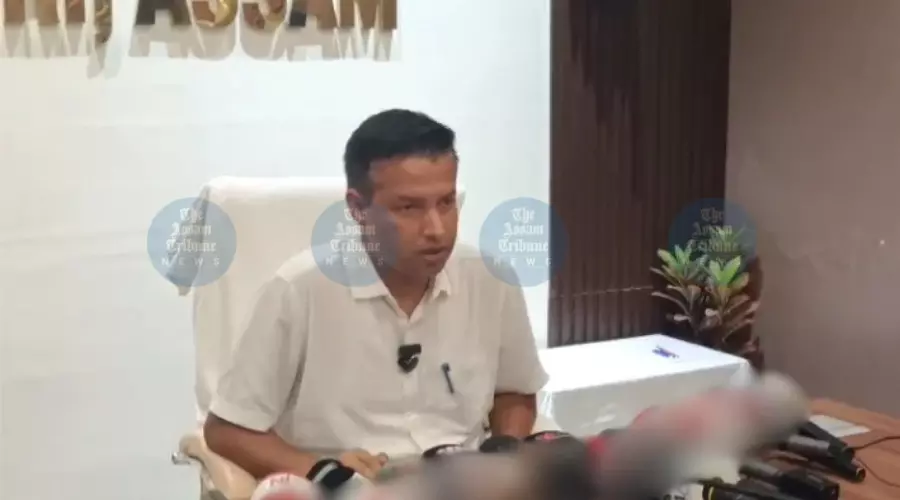
Dhubri District Commissioner Dibakar Nath said the administration had activated its disaster preparedness machinery and was closely monitoring the situation in coordination with the District Disaster Management Authority (DDMA), police, water transport authorities and other concerned departments.
According to the CWC advisory, flash flooding in the upper reaches of the Punatsangchhu river basin could cause a sudden rise in the water level of the Sankosh River, potentially affecting Alipurduar district in West Bengal and Dhubri district in Assam. The advisory indicated that floodwaters could reach the India-Bhutan border within approximately six to eight hours.
However, Nath said no abnormal rise had been observed in the Sankosh or Gangadhar rivers so far, with water levels remaining below the danger mark.
“Yesterday night, the CWC issued a special advisory informing us about a reported glacial lake outburst flood at Shintaphu Lake in Bhutan. The water level of the Sankosh River may rise and could affect Dhubri in Assam. Since last night, the DDMA, Circle Officers and other departments have been monitoring the water levels of the Gangadhar River, and we have not observed any abnormality,” Nath said.
“Since a special advisory has been issued, we are on high alert and closely monitoring the situation. People should not panic and should not send their children or family members to bathe or play in the river. Boat movement has also been restricted. We have directed the Water Resources Department to monitor the situation,” he added.
The administration has deployed officials and field personnel across vulnerable areas, including the Co-District Commissioner of Golakganj, Circle Officers of Agomani and Golakganj Revenue Circles, disaster management field officers, Land Records Assistants, and personnel of the District Disaster Response Force (DDRF) and State Disaster Response Force (SDRF).
Five Indian Reserve Battalion (IRB) boats have been positioned under Golakganj and Tamarhat police stations. Additional boats and rubber boats have also been mobilised from Goalpara and Bongaigaon to strengthen emergency response capabilities.
The administration is coordinating with SDRF and other response agencies to ensure that rescue operations can be launched without delay if required.
The Inland Water Transport authorities have been directed to restrict unnecessary boat movements, particularly at night, and closely monitor river traffic. Daytime boat movements are also to be avoided unless essential, with prior permission required from the concerned authorities.
The Water Resources Department has been instructed to keep a close watch on embankments and identify potential risks. Areas along the Sankosh and Gangadhar rivers have been identified as particularly vulnerable.
As a precautionary measure, 13 villages have been placed under close supervision by the district administration. These include Lohajani, Borobalar Char, Moragadhadhar Char, Koimari Char, Koimari Part-I, Koimari Part-II, Koimari Part-V, Koimari Part-VI, Jangbanha, Pakriguri, Boinaguri Part-I, Boinaguri Part-II, Belpara and Bakdokra.
Residents of riverine, char and low-lying areas have been advised to remain vigilant and follow official instructions. They have been urged to avoid fishing, bathing and other activities in rivers, and to ensure that children do not venture near riverbanks.
People have also been advised to avoid crossing river channels, refrain from unnecessary boat journeys and remain prepared for possible evacuation at short notice. Residents have been asked to keep essential documents, medicines and other necessities readily accessible.
The District Emergency Operations Centre (DEOC) is maintaining coordination with the DDMA, CWC and other concerned agencies as the administration continues to monitor the situation.