









AI assistants are becoming shopping destinations, but keeping up with them can stretch lean teams.
Shoppers are beginning to turn to AI assistants such as ChatGPT and Claude to discover products, compare options and make buying decisions. For direct-to-consumer (D2C) brands, this raises a new question: how do they stay visible as shopping behaviour changes, without building an in-house AI team?
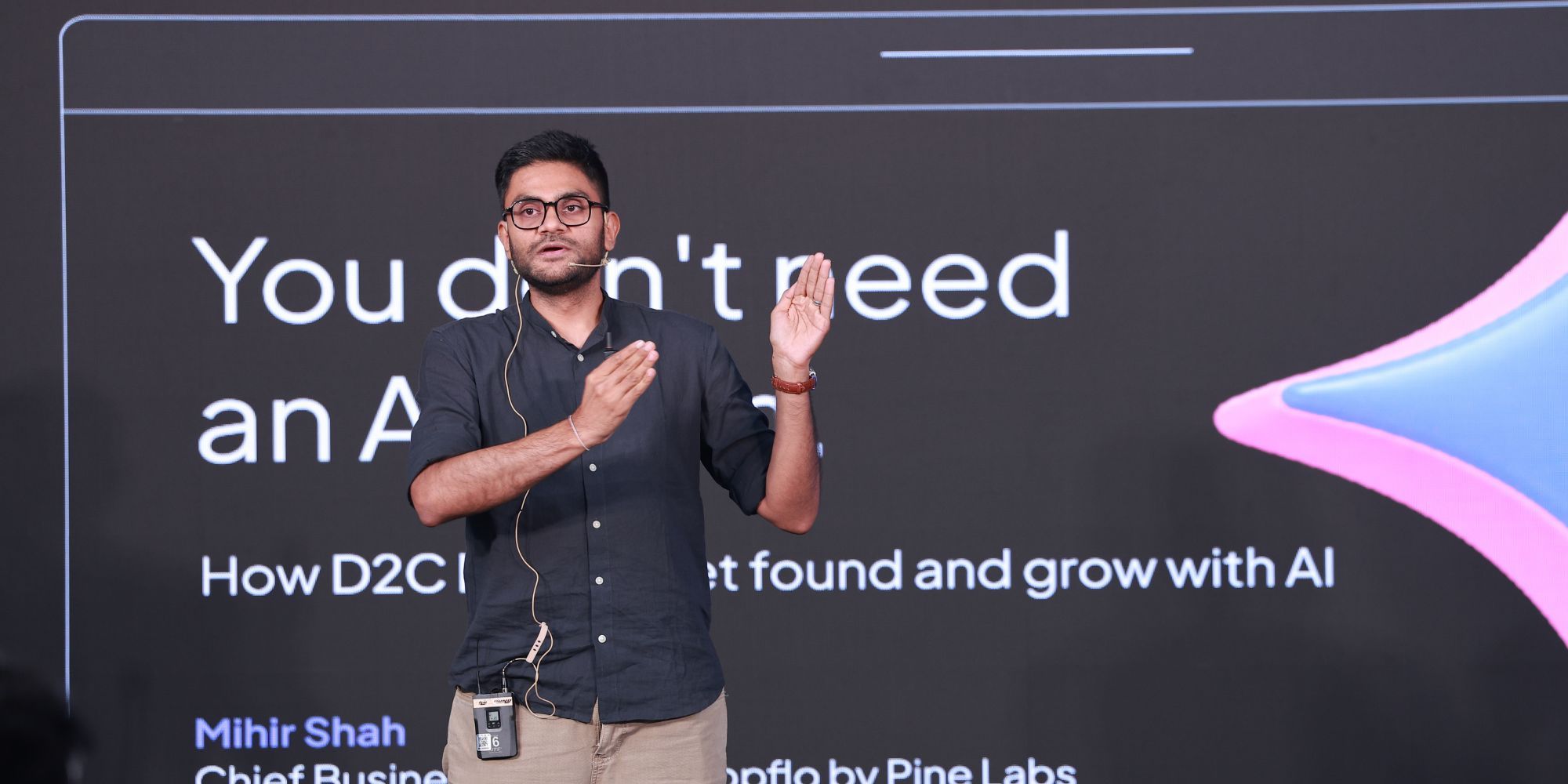
At TechSparks 2026, Mihir Shah, Chief Business Officer at Shopflo by Pine Labs, presented two ways the company aims to help brands tackle this challenge: agentic commerce, which connects product catalogues to AI-powered discovery and shopping surfaces, and AI agents that help businesses improve growth and operational efficiency.
“You don't need an AI team to figure out growth or efficiency for you. You need Shopflo,” Shah said.
Getting products in front of AI shoppers
Brands have spent years building visibility through search engines, marketplaces, and social media. AI assistants are adding another discovery channel, where shoppers can describe what they need and receive product recommendations.
Shopflo's agentic commerce offering aims to make participating brands' catalogues available across AI-native platforms, including ChatGPT, Claude and other emerging interfaces, said Shah. Through integrations, the company streams product catalogue information to these surfaces, allowing shoppers to discover relevant products and, where supported, proceed towards checkout.
For instance, a shopper looking for festive gifts under Rs 2,000 could discover products from a participating brand through an AI assistant. Shopflo's integration with Pine Labs' payments infrastructure is designed to support transactions through these experiences.
Shah argued that brands will need to look beyond traditional discovery channels as consumer behaviour evolves. However, AI visibility does not replace search engine optimisation (SEO), which continues to contribute to website traffic.
AI agents put growth decisions in context
Discovery is only one part of running a D2C business. Brands must also balance conversion rates, average order value, returns, customer retention and profitability, often using separate tools for each function, said Shah.
Shopflo's Growth Orchestrator, which Shah said was available in beta, aims to bring these decisions together. Brands can define their priorities, whether that means pursuing growth or protecting profitability, and receive recommendations based on their store's performance data.
During the demonstration, Shah showed how the system could identify a drop-off between address entry and payment, suggest a fee-transparency banner and propose an experiment to test whether the change improves conversions.
Brands can review recommendations, set limits and approve experiments before scaling them. They can also decide how much autonomy to give the agents.
“How much or how little to use the agents is under your control,” Shah said.
For D2C businesses working with lean teams, the proposition is less about adopting every new AI tool and more about making existing growth decisions easier to manage. Shopflo's approach combines AI-led discovery with tools that help brands act on their own business goals, while leaving the final decisions in their hands.