








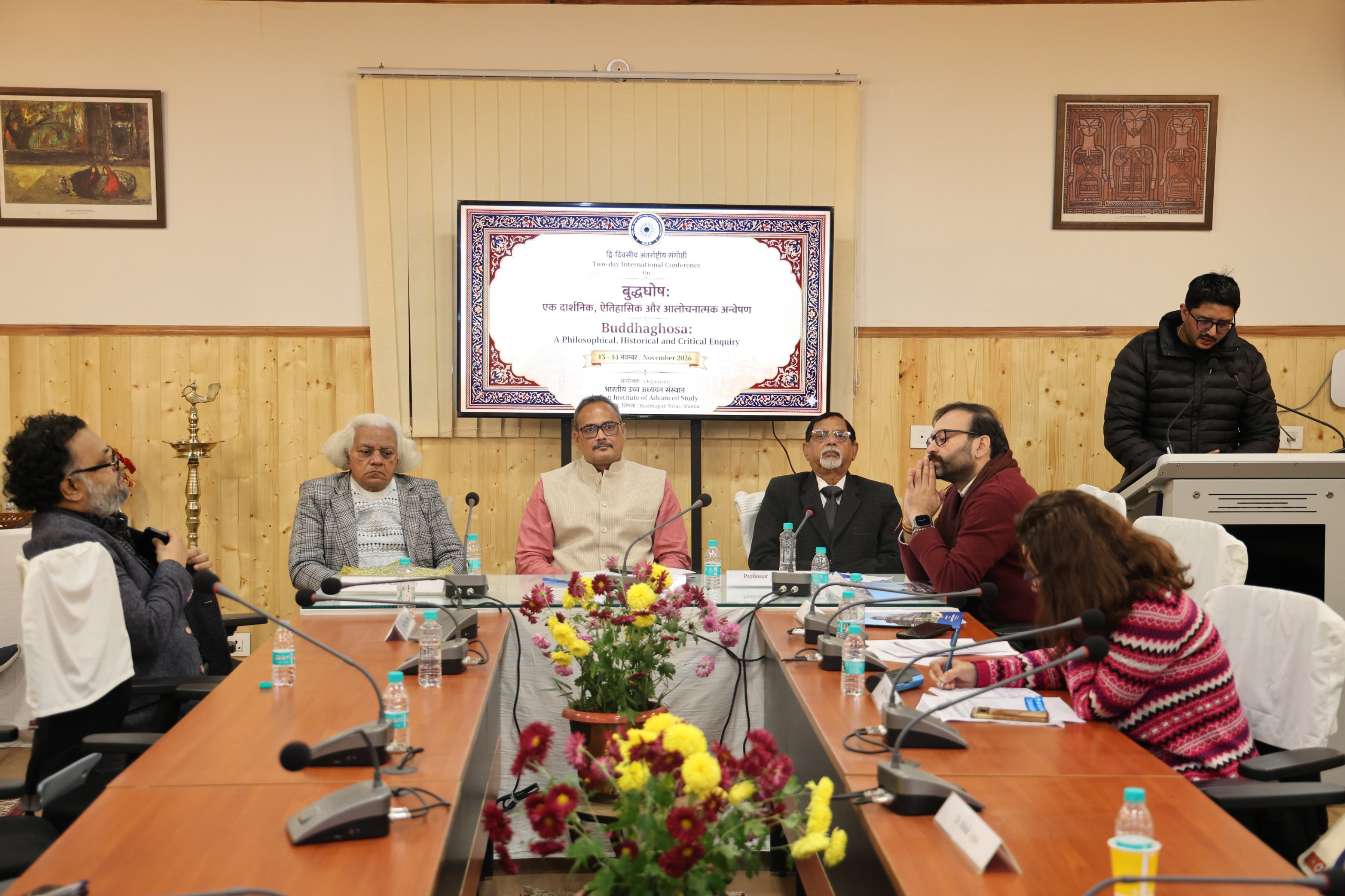
The two-day international conference on ‘Buddhaghosa: A Philosophical, Historical and Critical Enquiry’, organised at the Indian Institute of Advanced Study (IIAS), concluded yesterday with scholars debating whether Buddhaghosa’s writings should be viewed merely as interpretations and compilations of earlier Buddhist teachings or whether he should also be recognised as an independent and creative philosophical thinker.
During the discussions, scholars explored the creative role of his commentarial literature, his methods of interpreting classical texts and the contemporary relevance of his reinterpretation of ancient philosophical ideas.
Held on November 13 and 14, the conference brought together scholars, faculty members and research scholars from various universities and academic institutions across the country. They deliberated in depth on the diverse dimensions of the ideas, writings and philosophical contributions of Buddhaghosa, a prominent philosopher and scholar of the Theravada Buddhist tradition.
The valedictory session marking the conclusion of the conference was chaired by Prof Balaganapathi Devarakonda, Professor in the Department of Philosophy, University of Delhi. He said the primary objective of the two-day conference was to re-examine Buddhaghosa’s philosophical and intellectual contributions from historical, conceptual, commentarial and comparative perspectives.
“Rather than viewing Buddhaghosa merely as a commentator on Pali Buddhist texts, the conference sought to understand him as a thinker who played a significant role in interpreting, reinterpreting and systematically presenting the concepts of Buddhist philosophy. Particular emphasis was placed on understanding, through his ideas, the broader intellectual traditions of Indian philosophy and the dialogue among different philosophical schools,” he said.
The academic sessions on the first day explored philosophical questions relating to causality, time and continuity in the Visuddhimagga, along with Buddhaghosa’s ideas on philosophical psychology. Research papers were presented on subjects such as the mind, emotions, Brahmaviharas, mindfulness and well-being.
The sessions on the second day focused on Buddhaghosa’s contributions as a commentator, his life, language and intellectual legacy, comparative and cross-cultural philosophical perspectives, and his legacy from literary, doctrinal and regional viewpoints. Scholars examined his ideas in the context of other Buddhist and non-Buddhist philosophical traditions. They also presented research papers addressing questions concerning the self, non-self (anatta), time, consciousness, ethics and various other philosophical concepts.