






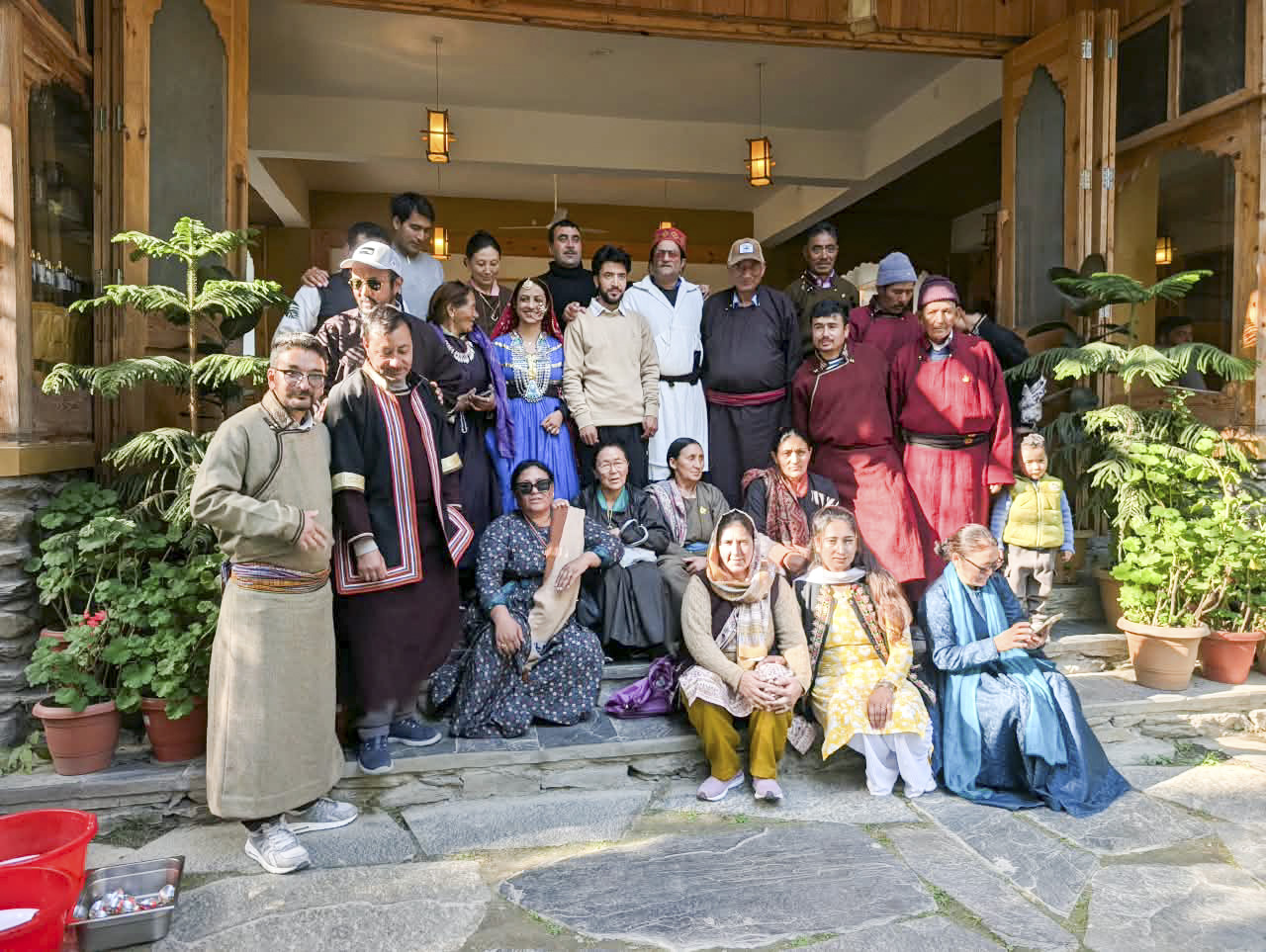
The mountains may differ in their landscapes, but the challenges of sustaining livelihoods, preserving cultural heritage and promoting responsible tourism are remarkably similar across the Himalayas. Bringing these shared experiences together, tourism stakeholders from 12 remote villages of Ladakh’s Sham Valley have arrived in Chamba to learn from the region’s community-led tourism initiatives and share their own experiences.
The two Himalayan regions are coming together under the ‘Chalo Chamba – Learning Trails’ Community Tourism Exchange (Ladakh-Chamba Edition 2026), an initiative designed to take learning beyond conference rooms and formal lectures to villages where rural tourism is actually practised.
The exchange, which began on Saturday, brings together homestay operators, rural tourism representatives and community members from both regions to understand how traditional livelihoods, local hospitality and cultural heritage can become the foundation of sustainable tourism.
Representatives from Takmachik, Tia, Temisgam, Wanla, Lamayuru, Skurbuchan, Khaltse, Dha, Hanu, Dhomkhar, Darchik and Baima are participating in the programme. They are sharing their experiences of running homestays, interacting with visitors, generating livelihoods in high-altitude settlements and preserving local traditions with their counterparts in Chamba.
The programme’s most distinctive feature is its field-based learning approach. Participants will visit three tourism destinations in Chamba — Khajjiar, Chaminu and Dawat Mahadev — each offering a different perspective on community participation and rural enterprise.
At Mystic Village, Khajjiar, the focus will be on authentic village accommodation, traditional cuisine and community participation in hosting visitors. Participants will explore how local households can benefit from tourism without losing the character and cultural identity of their villages.
The visit to Chaminu will introduce them to traditional watermills, locally made handicrafts, village walks and ways of engaging tourists through meaningful interactions with residents. The traditional gharat (watermill), in particular, demonstrates how heritage assets can be integrated into rural tourism experiences.
At Dawat Mahadev, discussions will focus on horticulture, farming, temple traditions and the scope for developing tourism around local identity. The village is also associated with Asian Games bronze medallist Seema Kumari, whose story forms part of the community tourism initiative titled ‘Seema’s Village: A Small Village with Big Dreams’.
The exchange is a joint initiative of the Chamba district administration, NotOnMap and the Leh-based Firgun Social Initiative Foundation. Beyond showcasing destinations, it aims to help communities develop tourism models that generate income locally while protecting fragile mountain ecosystems.
Key themes include waste management at homestays, creation of local employment opportunities, equitable sharing of revenue among community members and maintenance of ecological balance. The emphasis is on ensuring that the benefits of tourism reach ordinary households rather than remaining confined to a few commercial operators.
Manuj Sharma, co-founder of NotOnMap, said rural tourism was much more than providing accommodation to visitors. It was about creating livelihoods while preserving local culture, traditional food and the way of life of mountain communities.
“The fundamental objective of Learning Trails is to connect communities in remote mountain regions such as Chamba and Ladakh so that they can learn from each other’s experiences and strengthen homestays and responsible tourism in their respective areas. When local youth and women take tourism forward while remaining connected to their roots, it can help check migration from villages and strengthen the rural economy,” he said, appealing to local communities to participate actively in the initiative.
At its core, the initiative seeks to establish a network of Himalayan and rural destinations where tourism is not merely an economic activity but also a means of preserving heritage, strengthening community institutions and creating sustainable livelihoods. By enabling communities to learn directly from one another, Chamba and Ladakh are exploring a model in which villages themselves become the centre of the tourism experience.